
Anal itching can be uncomfortable and embarrassing. Many people try to solve it by washing more frequently, using scented soaps or wiping repeatedly after bowel movements. However, these habits may actually make the problem worse.
The medical term for persistent itching around the anus is pruritus ani. It can develop due to excessive cleaning, skin irritation, moisture, infections or underlying anorectal conditions.
In my practice, I believe it is important to understand one thing: anal itching does not always mean poor hygiene. Sometimes, excessive cleaning is the reason behind it.Let’s understand the common causes and daily habits that may aggravate this condition.
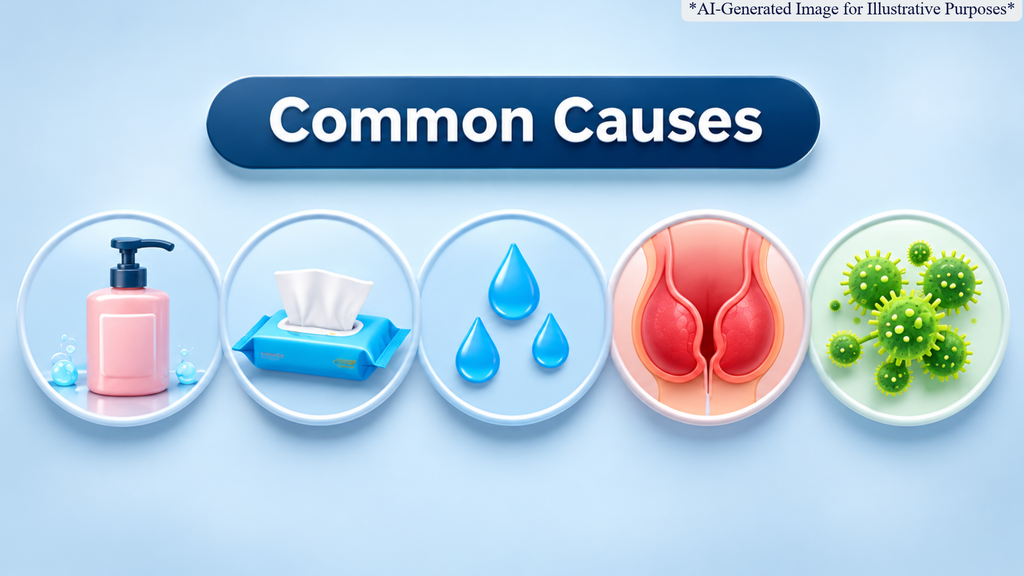
What Causes Anal Itching (Pruritus Ani)?
Several factors can cause itching around the anus. Some are related to everyday hygiene habits, while others involve medical conditions.
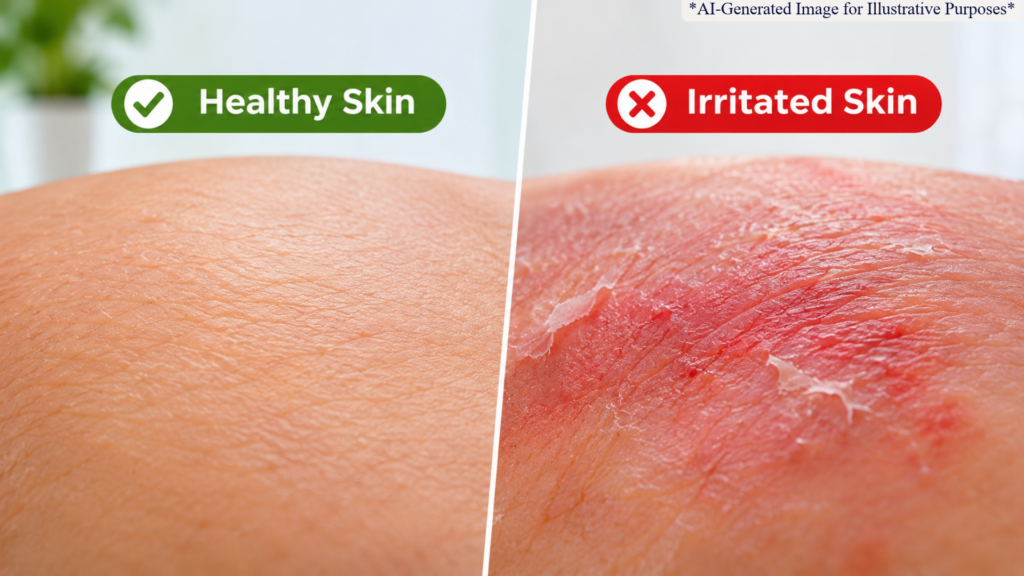
1. Excessive Washing and Cleaning
Washing the anal area repeatedly can remove its natural protective oils. This makes the surrounding skin more sensitive and prone to irritation.
Scrubbing with a washcloth or rubbing the area repeatedly can also damage the skin’s protective barrier.
2. Soap, Wet Wipes and Fragranced Products
Many people use scented soaps, antibacterial washes and wet wipes to maintain anal hygiene.
However, these products may contain fragrances, preservatives and chemicals that irritate sensitive skin. Repeated exposure can cause contact dermatitis, leading to itching, redness and burning.
Even products labelled as natural or gentle can trigger irritation in some people.
3. Excessive Wiping After Bowel Movements
Repeatedly wiping with dry toilet paper can create friction around the anus.
Rough wiping may cause small breaks in the skin, making the area sore and itchy. Instead of rubbing repeatedly, clean the area gently.
4. Sweat and Moisture
Sweat can accumulate around the anus, particularly in hot and humid weather.
Tight clothing and synthetic underwear can trap moisture. Remaining damp after bathing can also aggravate skin irritation and encourage fungal growth.
5. Piles and Anal Fissures
Haemorrhoids (piles) can cause mucus discharge and difficulty cleaning after bowel movements. This discharge may irritate the surrounding skin.
An anal fissure, which is a small tear in the anal lining, can also cause pain, burning and discomfort during bowel movements.
Both conditions may lead people to wipe or wash repeatedly.
6. Fungal Infections and Skin Conditions
Fungal infections, eczema, psoriasis and allergic skin reactions can cause persistent itching around the anus.
These conditions may also produce redness, scaling, rashes or burning sensations. They often require treatment based on the underlying cause.
7. Food and Digestive Problems
Certain foods and drinks may worsen anal itching in some people.Common triggers include spicy food, coffee, alcohol and acidic foods. Frequent loose stools, diarrhoea and constipation can also irritate the anal area.
How Does Excessive Cleaning Make Anal Itching Worse?
Your skin has a natural protective barrier that helps retain moisture and protect it from irritation.
Repeated washing, scrubbing and exposure to harsh cleansing products can weaken this barrier.
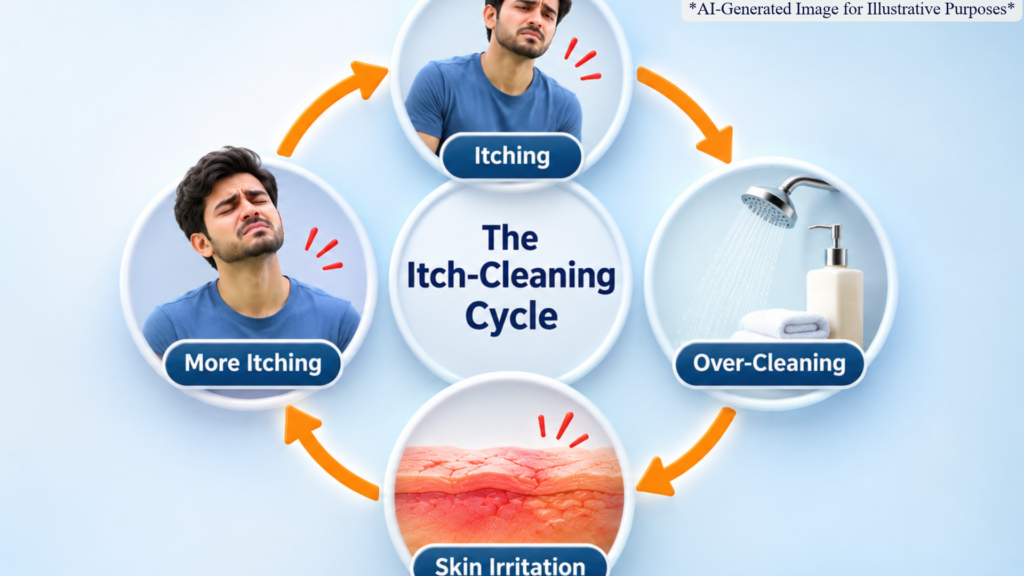
This can create a repeating cycle:
- You experience itching.
- You wash or wipe the area more frequently.
- Repeated cleaning irritates the skin.
- The irritation causes more itching.
- You feel the need to clean again.
This is closely related to the itch-scratch cycle. Scratching can further damage the skin and prolong the problem.
How Should You Clean Your Anus Without Causing Irritation?
Good anal hygiene does not require excessive cleaning. I recommend following these simple practices:
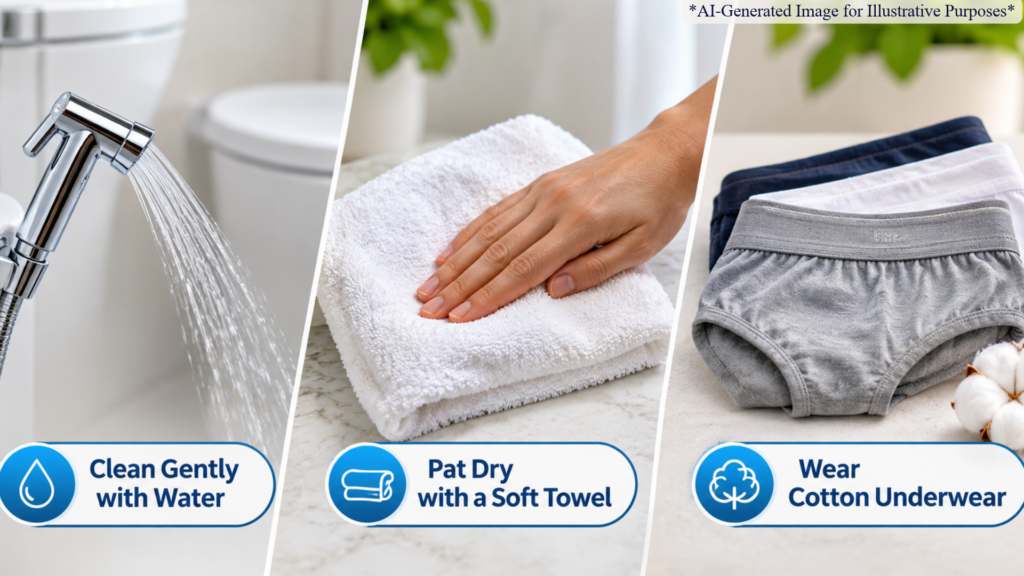
- Use plain water to gently clean the area after bowel movements.
- Avoid scented soaps, harsh cleansers and unnecessary wet wipes.
- Do not scrub or rub the skin.
- Gently pat the area dry with a soft towel.
- Wear loose, breathable cotton underwear.
- Change damp underwear when necessary.
- Avoid scratching, even when the itching feels uncomfortable.
If the irritation continues, avoid experimenting with multiple creams or medications without medical advice.
When Should You See a Proctologist?
Occasional itching may improve with simple changes in hygiene habits. However, persistent or recurring symptoms need medical attention.
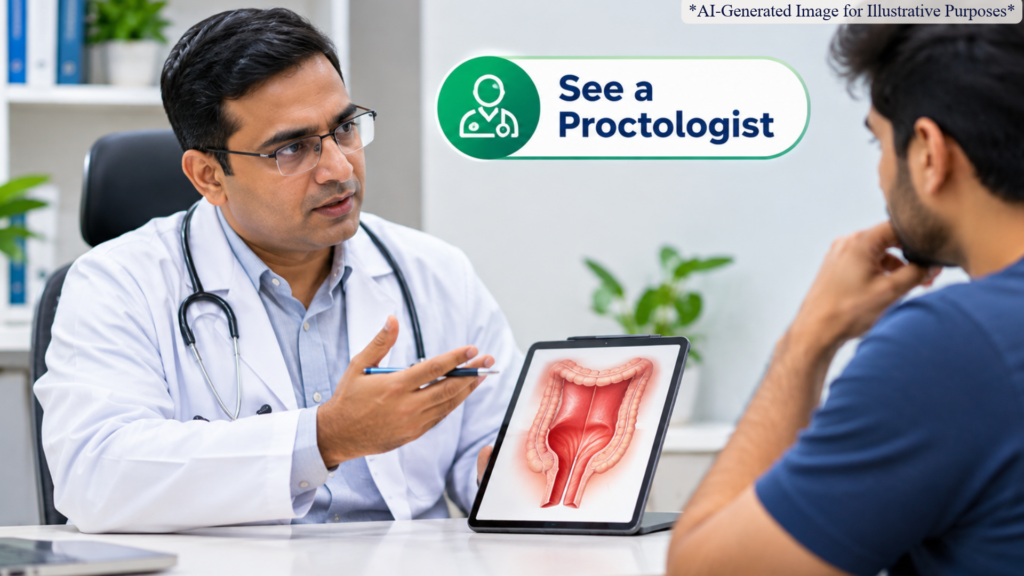
I recommend consulting a proctologist if you experience:
- Itching that does not improve with proper hygiene.
- Bleeding during or after bowel movements.
- Pain, swelling or lumps around the anus.
- Unusual mucus or stool leakage.
- Persistent redness, rashes or sores.
- Repeated episodes of anal itching.
A proctologist may examine the surrounding skin and anal canal to identify the underlying cause. Depending on your symptoms, further tests may be necessary.

Final Thoughts
Anal itching is not always a sign of poor hygiene. In fact, washing too frequently, scrubbing and using multiple cleansing products can make the problem worse.
I recommend maintaining gentle hygiene, keeping the area dry and avoiding products that cause irritation.
If the itching persists or keeps returning, do not ignore it. The right treatment starts with identifying the underlying cause.
Your goal should not be to clean more. It should be to clean gently and protect your skin.
Frequently Asked Questions About Anal Itching
1. Why does my anus itch even after washing?
Your anus may itch because of excessive washing, soap irritation, wet wipes or moisture around the skin. Piles, fungal infections and skin conditions can also cause itching. Washing more frequently may worsen the irritation.
2. Can excessive washing or using soap cause anal itching?
Yes. Frequent washing, scrubbing and using scented soaps can damage the skin’s protective barrier. This may cause dryness, irritation and itching. I recommend using plain water and gently patting the area dry.
3. Is anal itching a symptom of piles?
Yes. Piles can cause anal itching due to mucus discharge, moisture and difficulty cleaning after bowel movements. However, itching alone does not confirm piles. Other conditions, including skin irritation and infections, can cause similar symptoms.
4. Why does my anus itch more at night?
Anal itching may become worse at night due to warmth, sweating or skin irritation. In children, pinworm infections are another possible cause because these parasites lay eggs around the anus at night. Persistent symptoms need medical evaluation.
5. How can I stop anal itching at home?
Clean the area gently with plain water, avoid scented soaps and wet wipes, keep the skin dry and wear breathable cotton underwear. Avoid scratching. If the itching persists or returns, consult a proctologist to identify the cause.