
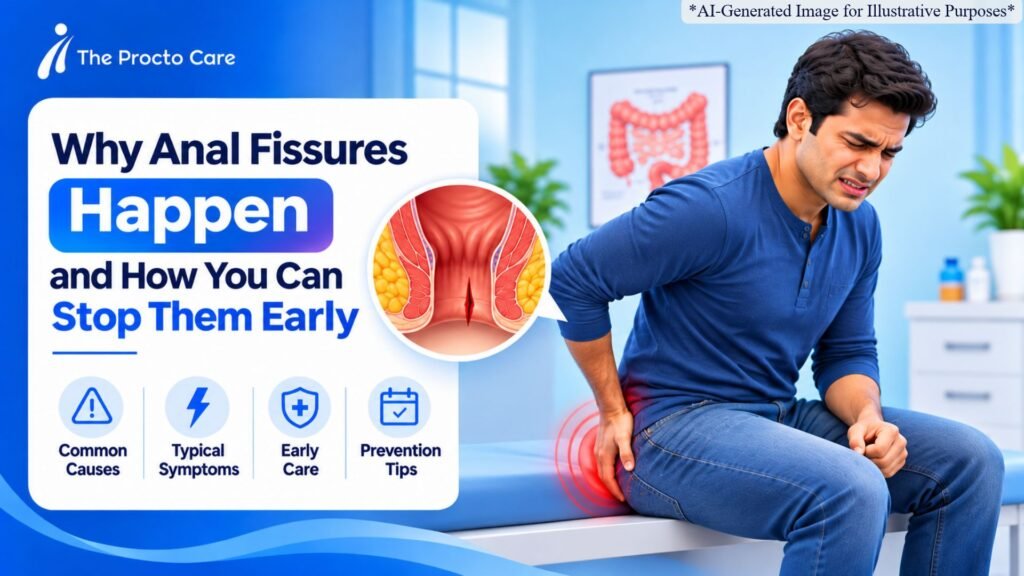
Have you ever experienced sharp pain while passing stool or noticed a few drops of bright red blood on toilet paper? You may have an anal fissure.
An anal fissure is a small tear in the thin lining of the anal canal. Although it may seem like a minor problem, it can cause significant pain and discomfort during bowel movements.
The good news is that many early anal fissures heal with proper care and treatment. However, you need to understand why they develop and take the right steps before the condition becomes chronic.Let me explain the common causes, early warning signs and practical ways to manage an anal fissure.
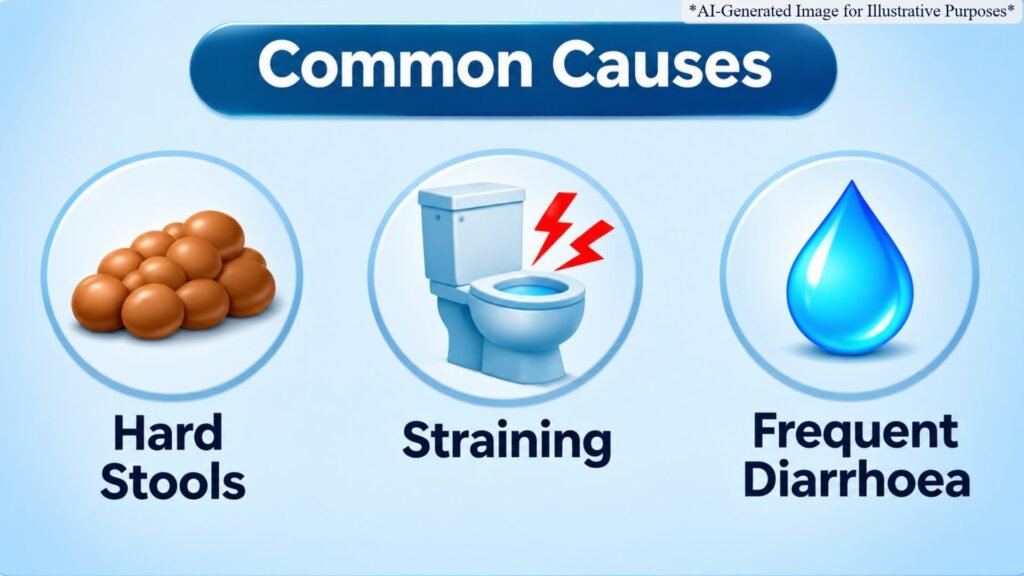
What Causes Anal Fissures?
An anal fissure usually develops when the delicate lining of the anal canal stretches or gets injured. Several factors can cause this injury.
1. Passing Hard Stools
This is one of the most common causes. When you pass hard or dry stools, they stretch the anal opening and can create a small tear in its lining.
Constipation makes this problem worse because stools become harder and more difficult to pass.
2. Straining During Bowel Movements
Excessive pressure while passing stool can injure the anal lining. Spending too much time on the toilet and repeatedly forcing stool out can also aggravate an existing tear.
3. Frequent Diarrhoea
Anal fissures do not develop only because of constipation. Frequent loose stools can irritate the anal canal and surrounding skin. Repeated bowel movements may increase the risk of small tears.
4. Tight Anal Sphincter Muscles
Your anal sphincter muscles control the opening and closing of the anus. Sometimes, these muscles become excessively tight and go into spasm.
This increases pressure around the injured area and reduces its blood supply. As a result, the tear may take longer to heal.
5. Ignoring the Urge to Pass Stool
Delaying bowel movements can make stools harder and drier. Some people also avoid using the toilet because they fear the pain. This creates a cycle of constipation, straining and repeated injury.
Pregnancy, childbirth and certain medical conditions, such as Crohn’s disease, can also increase the risk of anal fissures.
Why Does an Anal Fissure Become More Painful?
An anal fissure can create a cycle that makes healing difficult.
First, hard stools injure the anal lining. The injury causes pain, which makes the internal anal sphincter tighten. This muscle tightening reduces blood flow to the affected area and delays healing.
During the next bowel movement, passing stool can stretch the same wound again.If this cycle continues, an initially small tear may become a chronic anal fissure.
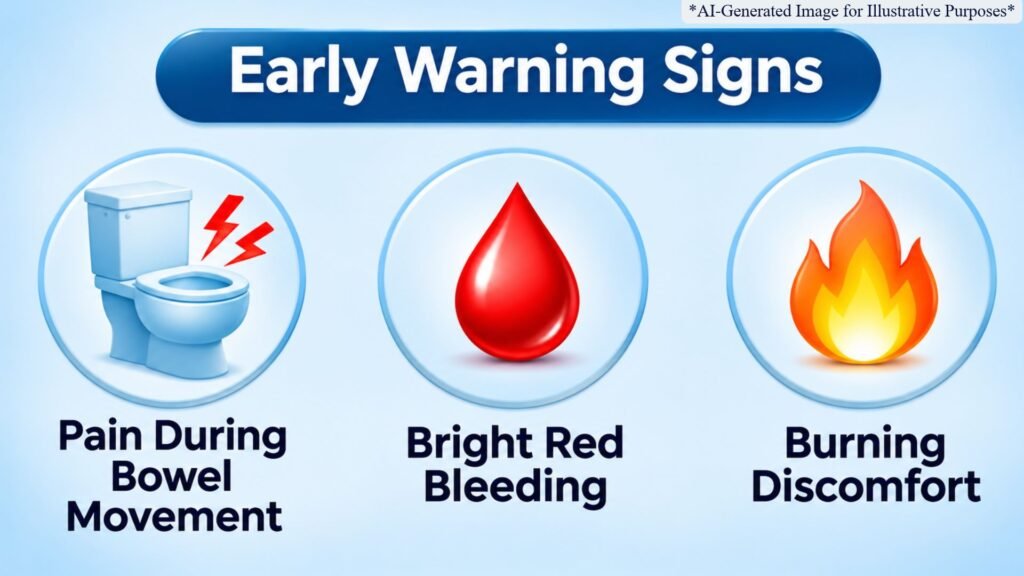
What Are the Early Signs of an Anal Fissure?
Look out for these common symptoms:
- Sharp or cutting pain during bowel movements.
- Burning sensation that continues after passing stool.
- Small amounts of bright red blood on toilet paper or stool.
- Itching or irritation around the anus.
- Fear of passing stool because of anticipated pain.
These symptoms may indicate an anal fissure, but other conditions can cause similar problems. A proper medical examination helps confirm the diagnosis.
How Can You Stop an Anal Fissure Early?
If you notice the early symptoms, take these steps to reduce irritation and support healing.

1. Eat More Fibre-Rich Foods
Include fruits, vegetables, whole grains and pulses in your daily diet. Fibre helps soften stools and makes them easier to pass.
Aim for approximately 25–35 grams of fibre daily, increasing your intake gradually.
2. Drink Enough Water
Adequate water intake helps maintain normal bowel movements. This becomes particularly important when you increase your fibre intake.
3. Avoid Straining
Never force stool out. Avoid sitting on the toilet for long periods and do not ignore the urge to pass stool.

4. Take Warm Sitz Baths
Sit in comfortably warm water for 10–15 minutes, especially after bowel movements. This may relax the anal muscles and relieve pain.
5. Maintain Gentle Anal Hygiene
Clean the area gently with water. Avoid harsh soaps, excessive rubbing and irritating products that can worsen discomfort.
6. Stay Physically Active
Regular walking and exercise help support healthy bowel movements and reduce the risk of constipation.
7. Seek Medical Advice Early
If pain or bleeding continues, consult a proctologist. Depending on the condition, I may recommend prescription ointments that relax the anal sphincter and help the tear heal.
Do not use medicated creams or laxatives without appropriate medical advice.
Can an Anal Fissure Heal Without Surgery?
Yes. Many acute anal fissures heal without surgery through dietary changes, proper bowel habits and appropriate medical treatment.
However, chronic fissures may require additional treatment, including prescription medication or procedures to relax the anal sphincter.The treatment depends on the duration, severity and underlying cause of the fissure. Surgery is not necessary for every patient.

When Should You Consult a Proctologist?
Do not ignore persistent pain or bleeding during bowel movements.
I recommend consulting a proctologist if:
- Your symptoms continue despite self-care.
- Pain or bleeding repeatedly returns.
- You notice a lump or skin tag near the anus.
- You experience severe pain during bowel movements.
- You develop recurrent anal fissures.
Heavy bleeding, fever, pus or severe swelling also require prompt medical attention.
Final Thoughts
An anal fissure often begins with a small tear, but ignoring the underlying cause can make it a persistent problem.
In my experience, addressing constipation, avoiding excessive straining and maintaining healthy bowel habits are important steps towards early recovery.
Do not wait for the pain to become unbearable before seeking help. Early diagnosis and appropriate treatment can help prevent complications and improve your quality of life.
If you experience pain or bleeding during bowel movements, consult a qualified proctologist for proper evaluation and treatment.
Top 5 Frequently Asked Questions About Anal Fissures in India
For your target audience, I recommend focusing on five questions that address the biggest patient concerns: causes, symptoms, home treatment, recovery time and surgery.
I reviewed patient-focused medical resources, Indian healthcare information and common search questions around anal fissures.
These are search-intent-based recommendations, not a verified ranking by Google search volume. The questions reflect recurring patient concerns found across resources such as 1mg, NHS, Mayo Clinic and ASCRS.
1mg+3
1. Top 5 questions to target
| Priority | FAQ question | Why include it? |
| 1 | What causes anal fissures? | Directly addresses the main topic. |
| 2 | How can I heal an anal fissure at home? | Targets early-stage patients seeking relief. |
| 3 | Can an anal fissure heal without surgery? | Addresses fear of surgical treatment. |
| 4 | How long does an anal fissure take to heal? | Addresses recovery expectations. |
| 5 | How can I differentiate between piles and anal fissures? | Addresses confusion between two common conditions. |
2. Ready-to-publish FAQ section
Frequently Asked Questions About Anal Fissures
1. What causes anal fissures?
Anal fissures commonly develop when hard stools stretch and tear the anal lining. Constipation, excessive straining and frequent diarrhoea can also cause them. Tight anal sphincter muscles may further delay healing by reducing blood flow to the affected area.
2. How can I heal an anal fissure at home?
You can support early healing by eating fibre-rich foods, drinking enough water and avoiding straining during bowel movements. Warm sitz baths for 10–20 minutes can also relieve discomfort. Consult a proctologist if symptoms persist or worsen.
3. Can an anal fissure heal without surgery?
Yes. Most acute anal fissures can heal without surgery through dietary changes, proper bowel habits and appropriate medication. However, chronic or recurring fissures may require additional treatment, depending on their severity and response to medical management.
4. How long does an anal fissure take to heal?
Many acute anal fissures heal within a few weeks with proper care. Chronic fissures may take longer and require medical treatment. The recovery time depends on the severity of the tear and whether you address its underlying cause.
5. How can I differentiate between piles and anal fissures?
Anal fissures usually cause sharp pain during and after bowel movements, sometimes with bright red bleeding. Piles may cause bleeding, itching or a lump near the anus. Both conditions can have similar symptoms, so a medical examination helps confirm the diagnosis.