
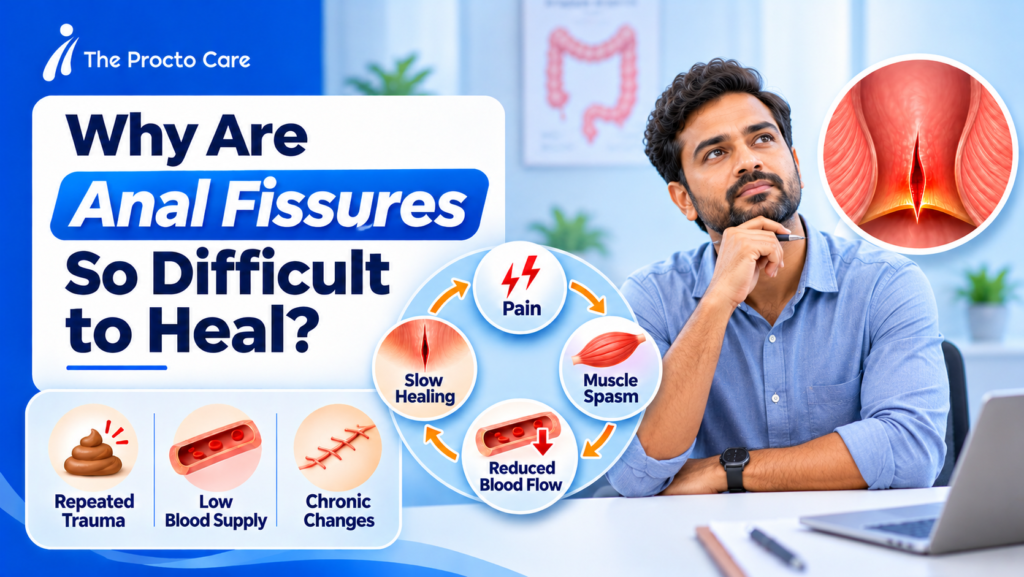
Many people think constipation is the only reason an anal fissure doesn’t heal. While hard stools can trigger a fissure, the real reason many fissures become chronic is an ongoing cycle of pain, muscle spasm, and poor blood supply.
The Hidden Reason Behind Delayed Healing
When an anal fissure develops, passing stool causes severe pain. This pain triggers an involuntary tightening of the internal anal sphincter muscle.
As the muscle tightens:
- Blood flow to the fissure decreases.
- The wound receives less oxygen and nutrients.
- Healing slows down significantly.
- The fissure remains painful and reopens repeatedly.
This creates a vicious cycle where pain causes spasm, spasm reduces blood supply, and poor blood supply prevents healing.
Other Factors That Make Fissures Stubborn
Repeated Trauma
Every bowel movement can stretch the wound and delay recovery, especially if stools are hard.
Naturally Poor Blood Supply
Most fissures occur in the posterior part of the anal canal, an area that naturally has lower blood circulation.
Chronic Changes
Long-standing fissures may develop scar tissue and skin tags, making spontaneous healing more difficult.
Why Diet Alone May Not Be Enough
Many patients improve their fibre intake, drink more water, and use stool softeners. These measures help reduce trauma from bowel movements, but they may not address the underlying sphincter spasm.
As a result, symptoms often improve temporarily but keep returning.
When Should You Seek Medical Advice?
Consult a specialist if you have:
- Severe pain during or after passing stool
- Bleeding that keeps recurring
- Symptoms lasting more than 6 weeks
- A skin tag near the anus
- Repeated episodes despite medicines and dietary precautions
The Bottom Line
Anal fissures are difficult to heal not because of constipation alone, but because pain causes muscle spasm, which reduces blood supply and prevents proper healing. Breaking this cycle is the key to successful treatment and long-term relief.